
How Investors Are Protected

How Investors Are Protected
This page explains how investor capital is structurally protected on ReFi Hub and how common risk scenarios are handled in practice. It does not imply guaranteed outcomes.
The Structural Baseline
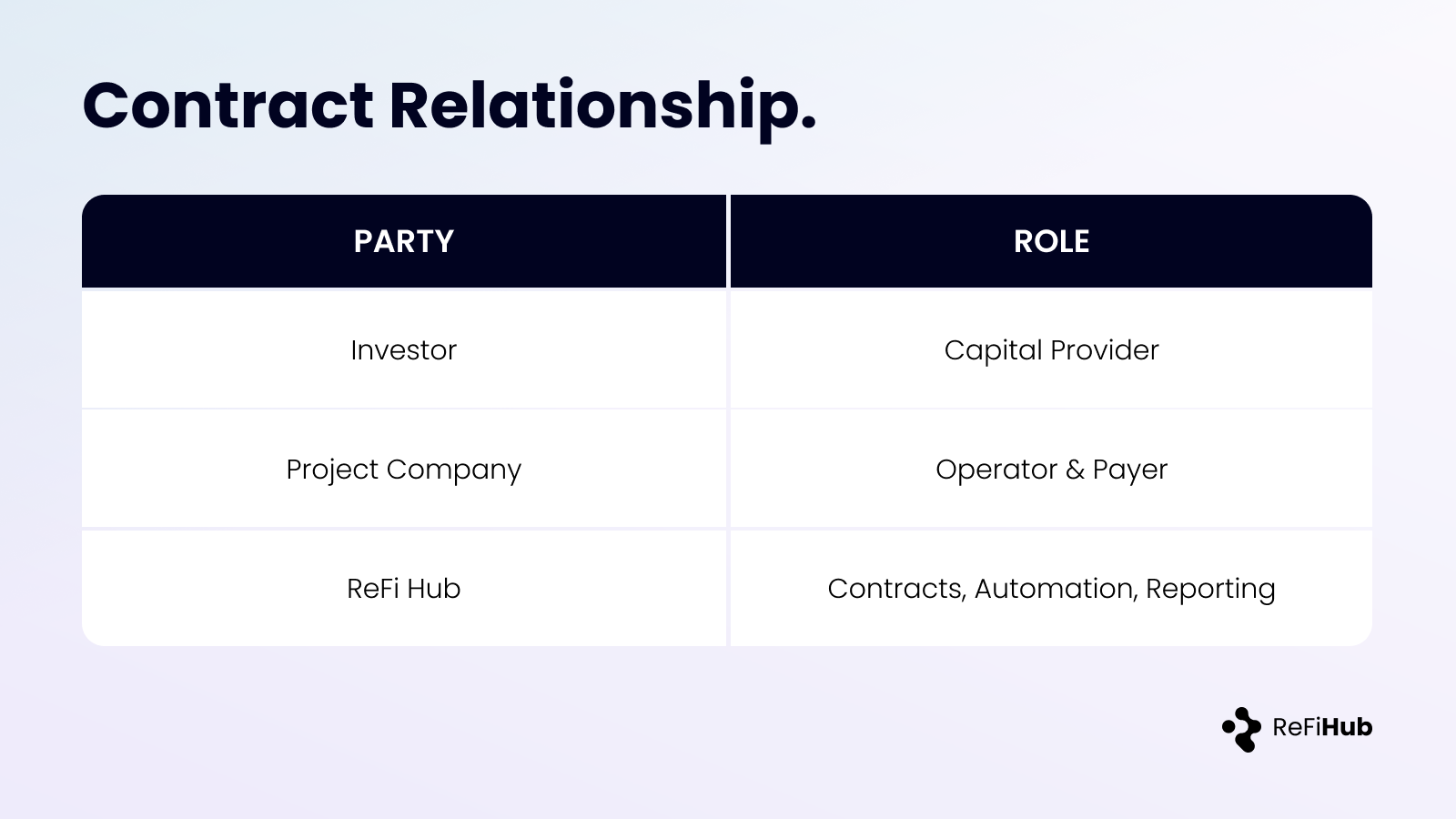
Each investment on ReFi Hub is a direct contractual agreement between the investor and the project company.
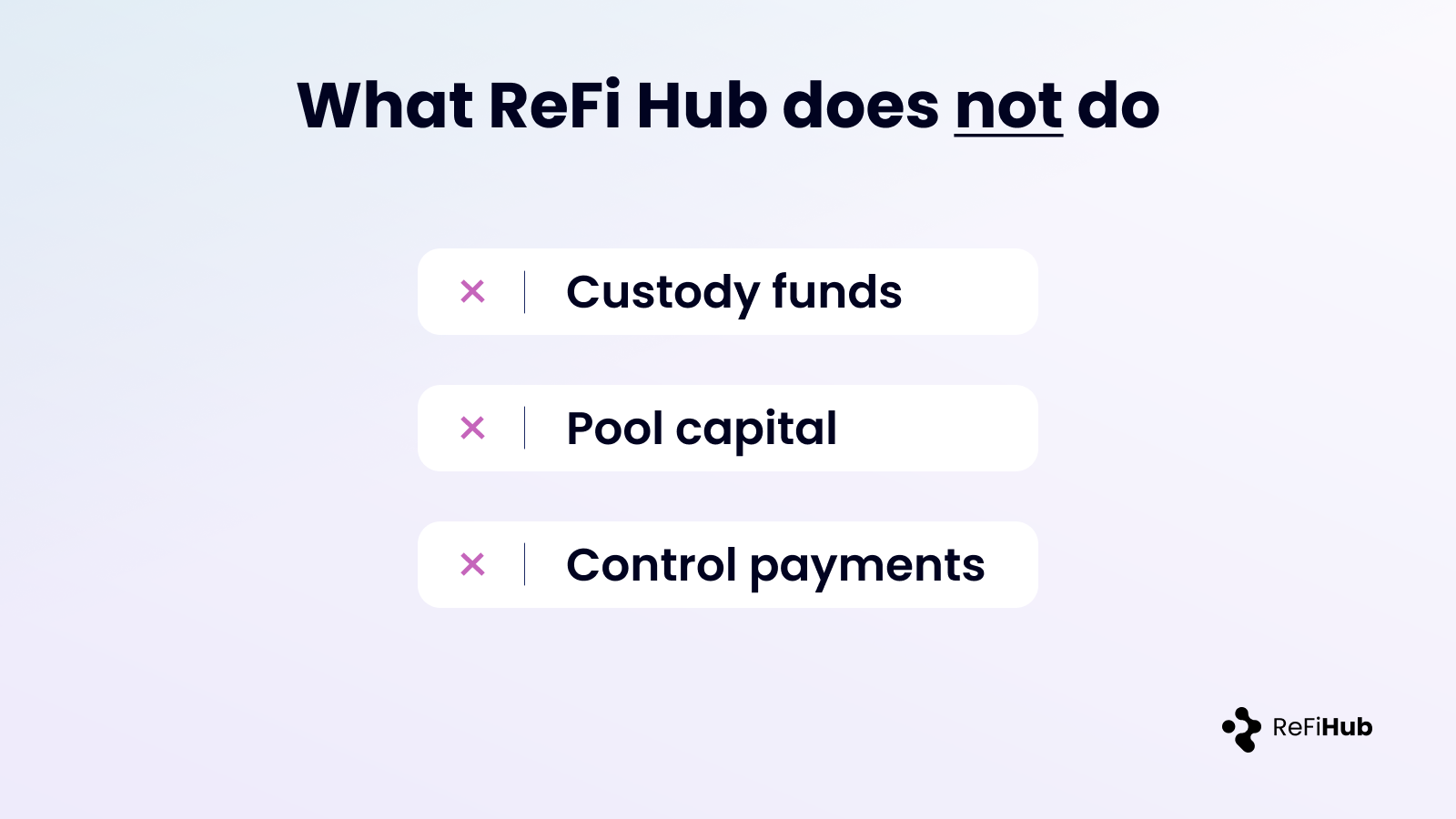
ReFi Hub does not custody funds, pool capital, or intermediate payments. It provides standardized contracts, automation, and reporting infrastructure.
What Supports Investor Claims
Investor rights are defined and enforced through a combination of:
- Contractual payment obligations
- Operating cashflows from the asset
- Asset-level collateral, where applicable
- Guarantees or covenants, where disclosed
The exact mix is project-specific and disclosed at listing.
Investor Scenarios
1. The asset underperforms
If the asset generates less revenue than expected:
- Investor cashflows adjust in line with actual performance
- Reporting continues without smoothing or intervention
- The operator remains responsible for asset operation and maintenance
Underperformance is reflected transparently.
2. Payments are delayed or missed
If payments are not made as scheduled:
- Contractual grace periods apply
- A formal default process can be initiated
- Cure periods and remedies follow the investment agreement, which typically provides a 15‑business‑day grace period after a missed payment, followed by a formal notice and up to 60 additional business days to cure before an event of default is triggered.
If unresolved, enforcement may proceed under applicable law.
3. The project company fails
If the project company becomes insolvent or cannot meet its obligations:
- Asset-level collateral may be enforced, where present
- Guarantees, if included, may be called under their terms
- Any recovered value is distributed to investors pro rata
Outcomes depend on jurisdiction, asset value, and legal enforceability.

What Protection Does — and Does Not — Mean
Protections are designed to:
- Define rights clearly
- Improve recovery prospects in adverse scenarios
- Align incentives between investors and operators
They do not:
- Eliminate asset or counterparty risk
- Guarantee capital or returns
- Provide secondary liquidity or early exit options
Closing Note
ReFi Hub structures investments so that risks are explicit, contractual, and observable.
Investors should assess each project on its own merits using the disclosed documentation.
Related posts

Investor FAQ — FLP II Solar Installation
Project Surya — February Operating & Distribution Report